
Learn AI4 min read
Advantages and disadvantages of AI: a South African view
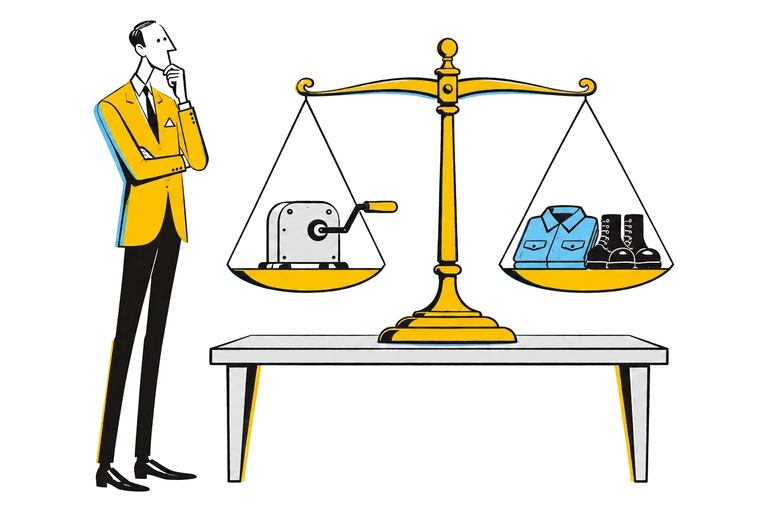
The advantages and disadvantages of AI are easier to judge from real examples than from general lists. AI is already part of daily life in South Africa, in places like Eskom’s fault reporting and grocery apps, and its failures are visible here too, from university detectors to government grant checks.
This guide sets out the main benefits and risks, with a South African example for each, so you can weigh them for your own studies, work or business.
Advantages and disadvantages of AI at a glance
| Advantages of AI | Disadvantages of AI |
|---|---|
| Faster routine work | Confident mistakes |
| Available at any hour | Unfair automated decisions |
| Lower cost for simple tasks | Privacy and data risks |
| Easier access to information and help | Job disruption |
| Translation and accessibility | Scams and deepfakes |
| Spotting patterns in large data | Heavy use of data and electricity |
The advantages of AI
It saves time on routine work. Drafting emails, summarising long documents and turning notes into a list of actions are jobs AI does in seconds. A small business without an admin person can get real value from this. See AI for South African business.
It is available at any hour. Eskom says its chatbot, Alfred, can log a power interruption and give you a reference number within seconds, day or night, which is a clear gain over waiting in a call centre queue.
It lowers the cost of help. ChatGPT and other leading tools have free plans, and paid plans start from about R105 to R149 a month in South Africa. Someone who could never afford a tutor or an adviser can at least get a first explanation.
It makes shopping and services simpler. Pick n Pay’s Penny lets you build a basket from a voice note or a photo of a handwritten list, and Checkers has Pixie in Sixty60.
It helps with language. AI can translate, and it can explain a government letter in simpler words. Performance is uneven across South Africa’s languages, though. Pick n Pay itself says its African-language support is not yet at the level of other languages.
It finds patterns people would miss. Banks and insurers have long used machine learning to flag unusual transactions. Our guide to what machine learning is explains how.
The disadvantages of AI
It makes confident mistakes. AI tools can invent facts and references. South Africa’s own draft National AI Policy was withdrawn in 2026, with the minister acting after reports of fictitious references, and the withdrawal was gazetted on 12 June 2026. Details are in our guide to AI regulation in South Africa.
Automated decisions can be unfair. In January 2025 the High Court found that SRD grant regulations were unconstitutional and invalid, and that automation had unfairly excluded eligible people. Government appealed. Read more on SASSA grant review data matching.
Detection tools can be wrong too. UCT stopped using Turnitin’s AI score from 1 October 2025 because it found such tools unreliable and unfair. See Turnitin AI detection in South Africa.
It creates privacy risks. Text you paste into a public tool may be stored, and may be used for training unless you opt out. South Africa’s privacy law applies whichever tool you use. Start with what POPIA is.
It makes scams easier. In June 2026 the FSCA warned about a deepfake investment video using the likeness of journalists Maya Fisher-French and Bruce Whitfield. Our guide on AI trading bots shows how to check an offer.
It disrupts jobs. Routine writing, support and some coding work are changing the fastest. It can also add new work. Our guide to what AI made obsolete looks at what has really changed so far.
It needs data and power. AI runs on data and on large data centres, which use a lot of electricity. In a country with costly data and an under-pressure grid, not everyone can benefit equally.
How AI differs from ordinary computer programs
A traditional program follows rules a person wrote, and gives the same output every time. An AI model learns patterns from data, and it can produce different answers to the same question. That flexibility is the source of most of its advantages, and of many of its disadvantages. Our guide to what AI is explains this further.
Challenges and opportunities for South Africa
| Opportunities | Challenges |
|---|---|
| Better services in local languages | Local languages are less well served |
| Cheaper tutoring and study help | Fairness in assessment |
| Productivity for small businesses | Skills and access to data |
| Faster government services | Safeguards for automated decisions |
| New jobs and exports of skills | No dedicated AI law yet |
How to get the benefits and limit the risks
- Start small, with low-risk tasks you can check.
- Keep a person responsible for any decision that matters.
- Protect personal information, and use business plans for business data.
- Verify facts, especially prices, laws and references.
- Be sceptical of offers that use AI as the selling point for quick money.
Learning the basics is the best protection of all. Our guide to AI courses in South Africa lists free options.
Questions people ask
What are the main advantages of AI?
AI handles routine work quickly, works at any hour, summarises and translates large amounts of information, and makes expert-style help cheaper to reach. A small business can draft documents or answer common questions in minutes, and someone with a basic phone can get an answer outside office hours.
What are the main disadvantages of AI?
AI can state wrong information with confidence, reflect bias in its data, expose private information, displace some work, and make scams easier. It also uses a lot of data and electricity. Most of these risks shrink when a person checks anything that matters before it is used.
Will AI take jobs in South Africa?
It will change many jobs, and some routine office work is most exposed. Nobody can give you a reliable number for South Africa, and forecasts vary widely. New work is appearing too, including AI training and building AI into businesses. Our guide to AI jobs in South Africa covers roles and pay.
How can you use AI in everyday life?
Common uses include asking questions, writing or improving emails, planning a budget or a meal, translating text, studying with explanations, and getting help from company chatbots such as Eskom's Alfred or Vodacom's TOBi. Check anything to do with health, money or the law with a qualified person.
Is AI good or bad?
Neither on its own. It depends on what it is used for and who checks it. The same technology can help a clinic summarise records and can help a scammer fake a famous person's voice. That is why rules like POPIA, and human review, matter so much.
Sources
- Eskom: Alfred chat bot
- TechCentral: Meet Penny, Pick n Pay's new AI shopping companion (2 July 2026)
- Wits CALS: Human rights implications of using algorithms for social grants (13 August 2026)
- UCT News: UCT scraps flawed AI detectors (24 July 2025)
- FSCA press release: deepfake investment scam (5 June 2026)
- Government Gazette: Withdrawal of the draft National AI Policy (12 June 2026)
- Protection of Personal Information Act 4 of 2013 (South African Government)
Checked November 2026. Prices and features change, so confirm on the official site before you buy.