

AI in South Africa4 min read
SASSA grant review AI data matching: what it means for you
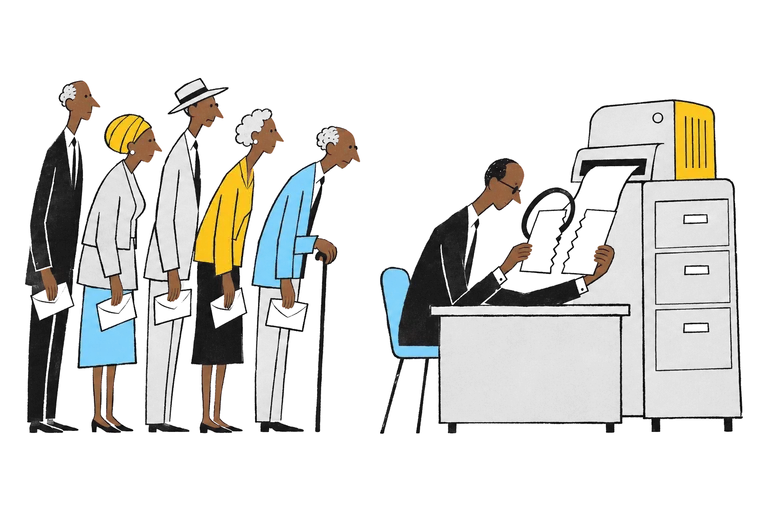
SASSA grant review AI data matching is the phrase people search when a grant is suddenly flagged or a payment goes missing. In plain terms, it means computers comparing what you told SASSA with records held by other institutions, to check whether you still qualify. When the records disagree, your grant can be sent for review.
This guide explains what is known, what is only rumour, what happens to your money, and how to respond or appeal. It is general information and not legal advice.
What SASSA is actually doing
The South African Social Security Agency plans to review 352,000 social grants in the 2026/27 financial year, using stronger data matching and identity checks, Explain reported in August 2026. In the first quarter alone it completed 105,600 reviews, which it estimates saved about R450 million, and it identified 169 suspected fraud cases this financial year.
SASSA’s stated reason is that a beneficiary’s circumstances can change: a new job, a new source of income, or in some cases fraud. The checks run against other institutions’ records:
| Source | What it can show |
|---|---|
| Banks and credit bureaus | Money in your accounts and your credit activity |
| SARS | Declared income and tax records |
| Unemployment Insurance Fund | UIF contributions and payments |
| NSFAS | Whether you receive student funding |
| Other government departments | Other government payments, employment or status |
| Biometric checks | Whether you are who the record says you are |
Is it really AI?
Partly a matter of words. “AI data matching” is mostly an online label. Government’s reported phrase is “data matching and verification”. Matching records across databases can be done with fixed rules and needs no AI model at all. For the SRD grant specifically, the court record and legal groups describe an algorithmic verification system that decides eligibility automatically, which is where the AI debate comes from.
Some websites go much further and claim that an AI runs a “lifestyle audit” on your bank account. We could not find a SASSA or government statement that says this. Be careful with those articles, and with anyone who offers to fix a flagged grant for a fee.
Why correct people get flagged
The Institute for Economic Justice lists problems it says the system has, based on the court case:
- Old data. Databases from SARS, UIF, NSFAS and Home Affairs may not reflect your circumstances today.
- All money counted as income. Bank verification may treat every deposit as income, including a loan, child maintenance, once-off help or money you hold for someone else.
- A frozen threshold. The SRD income test has stayed at R624 a month, the 2021 food poverty line.
- Missed notices. Explain reports that some people did not get a review notice because SASSA had outdated contact details for them.
These are the claims of one side in a court case, and government disagrees. They are still useful as a checklist of what to look at if you think your own result is wrong.
What the courts have said
On 23 January 2025 the High Court in Pretoria ruled in a case brought by the Institute for Economic Justice and #PayTheGrants against the Department of Social Development, SASSA and the Minister of Finance. It found that several SRD regulations were unconstitutional and invalid, and that automation had unfairly excluded eligible applicants.
Government appealed. The Supreme Court of Appeal heard the matter on 25 August 2026, with the Global Center on AI Governance admitted as a friend of the court, arguing that algorithms used without safeguards can harm people’s rights. Check for the outcome before relying on either position, as the case may have moved on since this guide was checked.
The Protection of Personal Information Act matters here too. Section 71 says a person may not be subject to a decision with legal consequences that is based solely on automated processing, unless an exception applies, such as a law that sets out appropriate protections. Whether that exception covers a given decision is a legal question for a lawyer or a law clinic.
What to do if your grant is under review
- Respond quickly. Beneficiaries who do not complete a required review can have grants suspended or lapsed.
- Update your details. Make sure SASSA has your current cellphone number and address.
- Gather documents. Take your ID, the notice, proof of income or no income, and recent bank statements.
- Explain unusual deposits. If money in your account was a loan or a family member’s, bring proof and say so.
- Keep records. Note dates, office names, reference numbers and who you spoke to.
- Use official channels. SASSA’s published helpline is 0800 60 10 11, and its email is grantenquiries@sassa.gov.za.
Never give your PIN to anyone who says they can help with a review.
How to appeal
Regulations under the Social Assistance Act give you a written appeal to the Independent Tribunal for Social Assistance Appeals, within 90 days of gaining knowledge of the decision. Write down which fact you say is wrong, attach your evidence, and keep a copy. If you need help, a community advice office, Legal Aid South Africa or a university law clinic can assist at no or low cost.
Why this matters beyond grants
SASSA’s reviews are one of the largest real uses of automated decision-making affecting South Africans. Our guide to AI regulation in South Africa explains where the law stands, and AI and POPIA covers your rights over your own information.
Questions people ask
Is SASSA using AI to review grants?
SASSA's own wording, as reported, is data matching and verification. For the SRD grant, the High Court and legal groups describe an automated, algorithmic verification system. We found no SASSA statement saying that an AI scans your bank account or audits your lifestyle, so treat websites that claim this with caution.
Which records does SASSA check?
Reports name banks, credit bureaus, SARS, the National Student Financial Aid Scheme and other government departments. SASSA's privacy information names SARS, the Unemployment Insurance Fund, NSFAS and retail banks as sources for eligibility checks and fraud management. It also uses biometric checks to confirm identity.
Will I lose my grant if I am flagged for review?
Not automatically. SASSA says being selected does not immediately remove you from the system, although payments can move later in the payment cycle while checks run. If you do not complete a required review, your grant can be suspended or allowed to lapse, so respond as soon as you can.
How do I appeal a SASSA decision?
Regulations under the Social Assistance Act let you appeal in writing to the Independent Tribunal for Social Assistance Appeals within 90 days of learning of the decision. Keep your decision letter or SMS, proof of income and bank statements, and write down which detail you say is wrong.
Are automated SRD grant checks legal?
This is still being argued in court. On 23 January 2025 the High Court in Pretoria found that a number of SRD regulations were unconstitutional and invalid, and that the automation unfairly excluded eligible applicants. Government appealed, and the Supreme Court of Appeal heard the case on 25 August 2026.
Sources
- Explain: Why Sassa is reviewing 352 000 grants using data matching (25 August 2026)
- Wits CALS: Human rights implications of using algorithms for social grants (13 August 2026)
- Institute for Economic Justice: The SRD grant court case, myths vs the facts (27 August 2026)
- Institute for Economic Justice: Why the SRD grant court case matters
- Social Assistance Act regulations on reconsideration and appeals (Government Gazette, 2022)
- Protection of Personal Information Act 4 of 2013, section 71 (South African Government)
- SASSA contact details
Checked November 2026. Prices and features change, so confirm on the official site before you buy.
Keep reading
AI in South Africa
AI in Afrikaans: what KI means and which AI tools speak it

AI in South Africa
AI regulation South Africa: where the law stands in 2026

AI in South Africa
AI trading bots in South Africa: do they work, or is it a scam?