AI in South Africa4 min read
Turnitin AI detection in South Africa: Unisa, UCT and your score
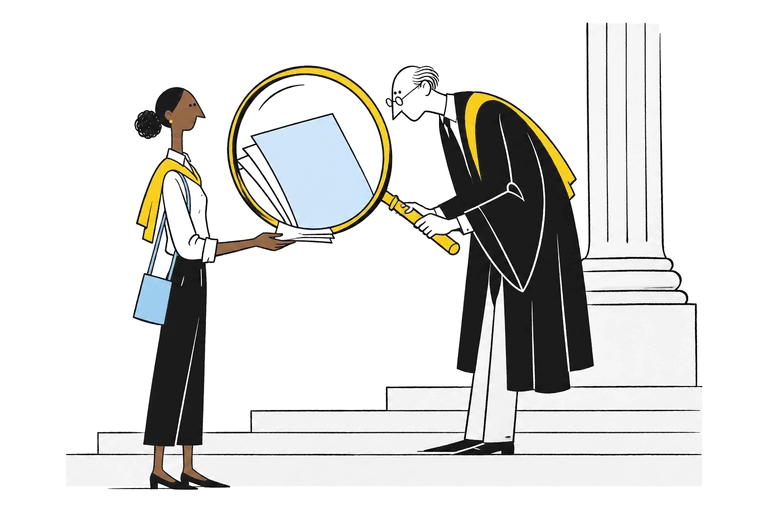
Turnitin AI detection is the part of Turnitin that estimates how much of your assignment may have been written by an AI tool such as ChatGPT. Many South African students first hear about it when a lecturer asks about a score. It is easy to misread, and it is not treated the same way at every university.
This guide explains what the score means, what Unisa and UCT do, why it can be wrong, and what to do if you are flagged. It is general information. Your own university’s rules are the ones that apply to you.
What is Turnitin?
Turnitin is a checking service that universities connect to their learning systems. It produces two separate results:
| Similarity Report | AI writing report | |
|---|---|---|
| The question | How much of this matches other sources? | How much of this may have come from AI? |
| What it finds | Matching text in web pages, papers and past submissions | Patterns its model links with AI writing, paraphrasers and bypasser tools |
| What a high number means | Check the matches, because quotes and references can count | Look closer; the score alone is not proof |
| Who usually sees it | Depends on your university’s settings | Usually lecturers and administrators |
Turnitin says the AI percentage is different from, and independent of, the similarity score. A low similarity score tells you nothing about AI, and a high one does not mean AI was used.
How to read the AI score
Turnitin’s guide lists these states for the report:
| What you see | What it means |
|---|---|
| 0% | No qualifying text was identified as likely AI |
| *% | The score was above 0% and below 20%, so no number or highlights are shown, because false positives are more common here |
| 20% to 100% | The share of qualifying text its model flags, with highlights |
“Qualifying text” means prose sentences in long-form writing, so bullet points and tables may not count in the same way. In August 2025 Turnitin added detection of likely AI bypasser tools, and on 14 October 2026 it updated its English model again. Older reports are not updated unless the work is resubmitted.
What South African universities do
Practice differs, which is why advice from a friend at another university may not apply to you.
Unisa. Turnitin’s April 2026 case study says Unisa, with around 400,000 students, uses the AI writing report next to the Similarity Report. Its senior integrity officer describes more attempts to get around checks, including AI humanisers, and says the core challenge is teaching responsible use. Vice-Chancellor Professor Puleng LenkaBula acknowledged a marked increase in AI misuse in early 2026, Academic Jobs reports, and Unisa has rejected sensational “scandal” language while saying that using AI to replace your own work counts as misconduct.
UCT. UCT stopped using Turnitin’s AI Score from 1 October 2025, because it considers such detectors unreliable and unfair to students. Plagiarism rules still apply, and lecturers can still question work in other ways.
UP, Wits and others. Many universities focus on disclosure: say what AI you used, and follow each course’s rules. See our guide to AI in education in South Africa for what each university says.
Why the AI detector can be wrong
Turnitin states that its model may misidentify text, and that false positives are possible. People raise particular concerns about formal writing and about students writing in a second or third language, which describes many South African students. Translation tools and grammar tools can also change how text looks to a detector. This is why Turnitin says the score should not be used on its own, and why a person must apply judgment alongside the university’s policy.
What to do if you are flagged
- Stay calm and read the notice. A flag is the start of a process, not a finding against you.
- Ask what the evidence is. Ask for the report and the policy being applied.
- Gather your record. Google Docs or Word version history, notes, research and earlier drafts all help.
- Be ready to explain the work. Being able to discuss your argument and sources in your own words is strong evidence.
- Follow the appeal route. Use your faculty’s process, and speak to your student representative council or student support office if you need help.
”Free Turnitin checkers”
Search results are full of sites that offer a free Turnitin check. They are not your university’s system. You cannot be sure what they do with your document, and some of it may later match when you submit officially. If you want to check your own work, ask whether your university offers a draft submission, or use a reference checker for your citations.
We do not cover tools for disguising AI text. They break most universities’ rules, and Turnitin now looks for them. If you want to compare AI detectors for your own checking, see Ranker’s list of AI detectors.
Questions people ask
What is Turnitin?
Turnitin is software that universities use to check assignments. Its similarity report shows how much of your text matches other sources, and its AI writing report estimates how much may have come from an AI tool. Students normally reach it through their university's learning system, not by buying it themselves.
What is an acceptable Turnitin percentage in South Africa?
There is no national number. Each university, faculty and lecturer sets what they accept. A similarity score is not proof of plagiarism, because quotes and references can match too. Ask your module leader or check your faculty's policy instead of relying on a number from a website.
Does Unisa use Turnitin for AI?
Yes. A Turnitin case study published in April 2026 says Unisa, with about 400,000 students, uses the AI writing report alongside the Similarity Report. Unisa's senior integrity officer says the larger task is teaching responsible AI use, not only deterring misuse.
Why did UCT stop using Turnitin's AI score?
UCT's Senate Teaching and Learning Committee agreed to discontinue the AI Score from 1 October 2025. UCT said detection tools are unreliable and can compromise student trust and fairness, and it moved its focus to AI literacy and to assessment design instead.
Can Turnitin's AI detector be wrong?
Yes. Turnitin itself says its model may misidentify human-written, AI-generated and AI-paraphrased text, and that false positives are possible. It says the result should not be the only basis for action, and that a person must apply judgment along with the institution's policy.
Can I check my work on Turnitin for free?
Be careful with sites that offer a free Turnitin check. They are not your university's system, you cannot be sure how they store your document, and uploading your work to one may cause problems when you submit it officially. Ask your university whether it offers a draft submission through its own system.
Sources
- Turnitin: Using the AI Writing Report
- Turnitin: AI writing detection model release notes
- Turnitin: Unisa preserves the value of higher education with AI writing detection (30 April 2026)
- UCT News: UCT scraps flawed AI detectors (24 July 2025)
- African News Agency: UCT drops use of AI detection software (28 July 2025)
- Academic Jobs: AI cheating crisis in South African universities
Checked November 2026. Prices and features change, so confirm on the official site before you buy.
Keep reading
AI in South Africa
AI in Afrikaans: what KI means and which AI tools speak it
AI in South Africa
AI regulation South Africa: where the law stands in 2026

AI in South Africa
AI trading bots in South Africa: do they work, or is it a scam?