

AI in South Africa4 min read
What is POPIA? The POPIA Act explained in plain English
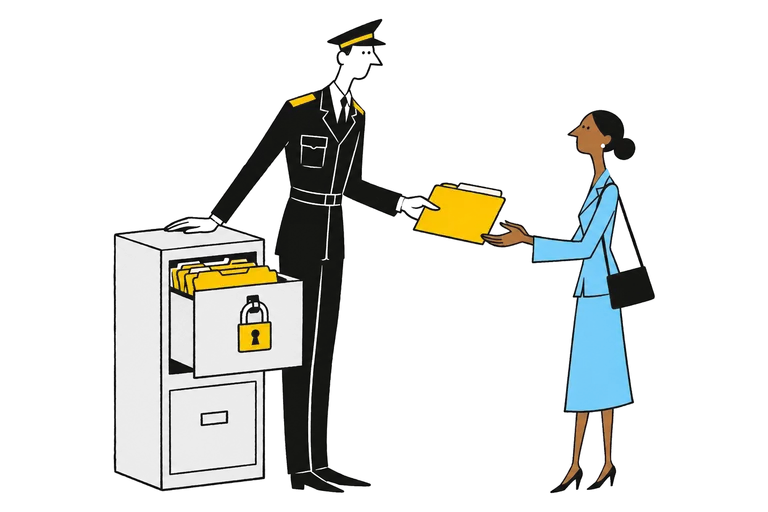
POPIA is South Africa’s privacy law. The letters stand for the Protection of Personal Information Act, and the Act controls how businesses, government and other organisations collect, use, store and share information about people. If you run a business with customer or staff records, it applies to you.
This guide gives you the plain version, section by section, drawn from the text of the Act, and it explains what POPIA means now that so much data passes through AI tools. It is general information and not legal advice. The Act’s as-enacted text is what we checked, so confirm any amendments for a specific decision.
What POPIA does
Section 2 sets out the purpose. POPIA gives effect to the constitutional right to privacy, regulates how personal information may be processed, gives people rights and remedies, and establishes the Information Regulator to enforce it. It uses a few terms you will see everywhere:
| Term | Plain meaning | Everyday example |
|---|---|---|
| Personal information | Information about an identifiable living person, and where applicable an existing company | Name with an ID number, a phone number, a medical record |
| Data subject | The person the information is about | Your customer |
| Responsible party | Whoever decides why and how it is processed | Your business |
| Operator | Someone processing it for you under a contract | Your payroll or email provider |
| Processing | Almost anything you do with it | Collecting, storing, sharing or deleting |
The eight conditions of POPIA
Section 4 lists eight conditions for lawful processing. Most compliance work comes back to these.
| Condition | What it asks of you |
|---|---|
| 1. Accountability | Someone in your organisation answers for compliance |
| 2. Processing limitation | Have a lawful reason, and collect only what you need |
| 3. Purpose specification | Collect for a specific purpose, and do not keep it longer than needed |
| 4. Further processing limitation | Do not reuse it for something unrelated to that purpose |
| 5. Information quality | Keep it accurate, complete and up to date |
| 6. Openness | Tell people what you collect and why |
| 7. Security safeguards | Protect it, and report security compromises |
| 8. Data subject participation | Let people access and correct their information |
Certain information gets stricter protection. Special personal information, which includes religion, health, biometrics and race, may only be processed in limited circumstances. Children’s information also has its own rules.
Your rights under POPIA
You can ask an organisation whether it holds your information, and ask for a copy or a correction. You can object to some processing, including direct marketing. You must be told when your information is collected, and you can complain to the Information Regulator. You can also bring a civil claim for damages.
Fines and penalties
| What | Limit | Where in the Act |
|---|---|---|
| Administrative fine through an infringement notice | Up to R10 million | Section 109 |
| Serious offences | A fine, up to 10 years in prison, or both | Section 107(a) |
| Other offences | A fine, up to 12 months in prison, or both | Section 107(b) |
The best-known case shows how contested this can be. In December 2024 the Regulator gave the Department of Basic Education a R5 million fine for publishing matric results in newspapers. The Pretoria High Court later set aside the notices, MyBroadband reported in 2026, and legal views on that ruling were split. Check for any further appeal before relying on it.
What POPIA means when you use AI
POPIA does not mention AI, and it does not need to. Three parts apply directly.
Sending data overseas. Most AI tools process data abroad. Section 72 says you may not transfer personal information to a third party in a foreign country unless an exception applies, for example adequate legal protection there or the person’s consent. See can you put customer data in ChatGPT.
Automated decisions. Section 71 says a person may not be subject to a decision with legal consequences, or a substantial effect, based solely on automated processing that profiles them, unless an exception applies. If you use AI to reject a loan or a job applicant, keep a person involved. The SASSA grant review debate turns on questions like this.
Your operators. An AI provider that processes personal information for you may count as an operator. Section 21 requires a written contract that sets out security measures. Our guide to POPIA-compliant AI tools compares business plans, and how to anonymise data shows how to remove the risk at the source.
A starter POPIA compliance checklist
- Register your Information Officer with the Information Regulator. By default this is the head of the organisation.
- List what you hold: which personal information, where it lives, and why you have it.
- Publish a privacy notice in plain language.
- Limit access and secure your systems.
- Sign contracts with suppliers who process data for you.
- Plan for a breach, because you must notify the Regulator and the people affected.
- Delete what you no longer need, and keep a record of your decisions.
If you are building AI into your business, these questions are best settled before anything goes live. Our guide to AI regulation in South Africa covers the wider legal picture.
Questions people ask
What does POPIA stand for?
POPIA stands for the Protection of Personal Information Act, Act 4 of 2013. You will also see it written as the POPI Act. It is South Africa's main data privacy law, and it gives effect to the constitutional right to privacy.
What counts as personal information under POPIA?
Information about an identifiable living person, and where applicable an existing company. Section 1 lists examples including race, gender, age, health, religion, education, financial and employment history, ID numbers, email and street addresses, phone numbers, location, biometrics, personal opinions, and private correspondence.
When did POPIA come into effect?
A proclamation published in June 2020 brought most of the Act into force on 1 July 2020, including sections 2 to 38 and 55 to 109. Sections 110 and 114(4) commenced on 30 June 2021. Section 114(1) gave organisations one year to comply, which is why 1 July 2021 is the date many people remember.
What is the POPIA fine?
Section 109 allows the Information Regulator to issue an administrative fine, capped at R10 million, through an infringement notice. Serious offences can also lead to a court-imposed fine, or imprisonment of up to 10 years in the worst cases under section 107. A person may also claim civil damages.
What happened with the matric results POPIA fine?
On 23 December 2024 the Information Regulator issued the Department of Basic Education with a R5 million fine over publishing matric results in newspapers. MyBroadband reported in 2026 that the Pretoria High Court set aside the Regulator's enforcement and infringement notices, saving the department the R5 million.
Does POPIA apply to AI tools like ChatGPT?
POPIA has no special AI chapter, but it applies when you process personal information with any tool. If you put customer data into an AI service, you are still responsible. Section 72 restricts sending personal information abroad, and section 71 limits decisions made solely by automated processing.
Sources
- Protection of Personal Information Act 4 of 2013 (South African Government)
- Information Regulator: POPIA, including commencement notes
- Commencement of certain sections of POPIA, Proclamation R21 of 2020
- Information Regulator: Media statement, R5 million infringement notice to the DBE (23 December 2024)
- MyBroadband: Information Regulator loses R5-million fight over matric results
- Information Regulator: Protection of Personal Information
Checked November 2026. Prices and features change, so confirm on the official site before you buy.
Keep reading
AI in South Africa
AI in Afrikaans: what KI means and which AI tools speak it

AI in South Africa
AI regulation South Africa: where the law stands in 2026

AI in South Africa
AI trading bots in South Africa: do they work, or is it a scam?